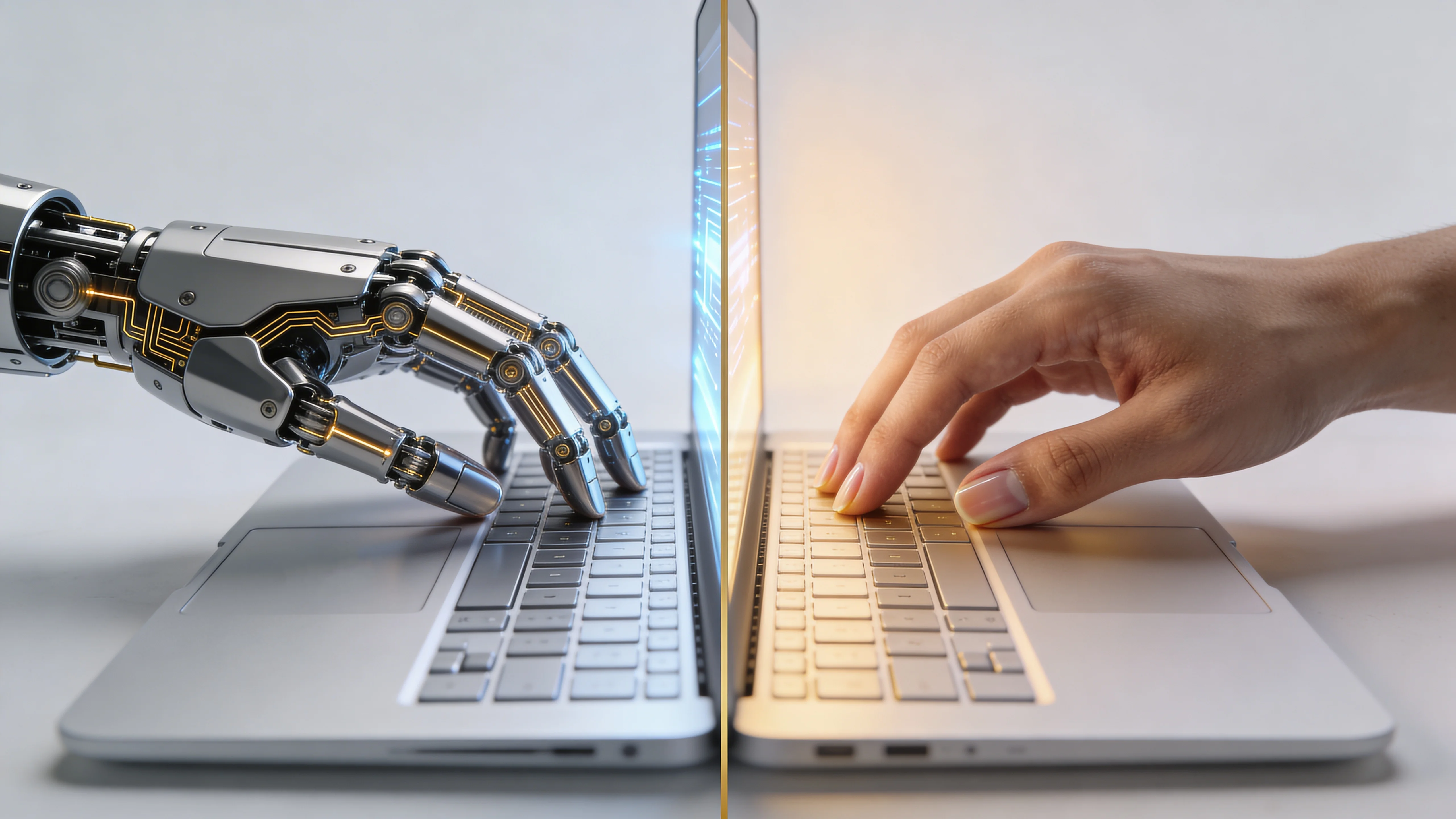
AI Photo Editing vs Human Retouching: What's the Real Difference?
Table of Contents
AI photo editing tools are everywhere in 2026. Photoshop has generative fill, Canva has magic edit, and there are dozens of apps that promise to retouch your photos in seconds. So why would anyone still pay a human retoucher?
Because the results are not the same. Not even close.
I've been retouching photos professionally for over 9 years, and I've watched AI tools evolve from basic filters to genuinely impressive technology. But after editing thousands of images for photographers, e-commerce brands, and agencies, I can tell you exactly where AI falls short — and where it doesn't matter.
What AI Does Well
Let's be fair. AI editing tools have gotten remarkably good at a few things:
Background removal — tools like remove.bg handle simple backgrounds almost perfectly
Basic exposure and color correction — auto-enhance features in Lightroom and phone apps
Noise reduction — AI denoisers outperform traditional methods
Upscaling — enlarging small images without losing too much detail
For casual use — social media posts, quick fixes, personal photos — AI tools are genuinely useful. If you need a decent result in 10 seconds, they deliver.
Where AI Fails
The problems start when quality actually matters. When your product photos need to sell a $200 item. When your headshot represents your professional brand. When consistency across 500 images is non-negotiable.
Skin retouching looks fake
AI smooths skin by blurring it. The result is that plastic, uncanny-valley look — no pores, no texture, no life. Professional retouchers use frequency separation and dodge-and-burn techniques to remove blemishes while preserving natural skin texture. The difference is immediately visible.
It can't understand context
AI doesn't know that the wrinkle in your product photo is a defect, but the wrinkle in a leather bag is a feature. It doesn't know that the shadow under your model's chin should stay, but the shadow from the overhead light should go. A human retoucher understands what the image is trying to communicate.
Consistency across batches is impossible
If you run an e-commerce store with 200 products, you need every image to look like it belongs together — same white balance, same shadow style, same level of retouching. AI processes each image independently with no memory of what it did to the previous one. A human retoucher develops a style guide and applies it consistently.
Complex edits are unpredictable
Object removal, compositing, background replacement — AI can attempt these, but the results are hit-or-miss. You might get something usable, or you might get a melted hand, a blurred product edge, or a background that doesn't match the lighting. With professional editing, you know exactly what you're getting.
Color accuracy is critical for products
If you sell clothing, furniture, or cosmetics, your product colors need to match reality. Returns due to "color looked different online" cost e-commerce businesses billions annually. AI auto-correction often shifts colors for aesthetic appeal rather than accuracy. A human retoucher calibrates to match the actual product.
The Real Cost Comparison
AI tools seem cheaper on paper. A $20/month subscription vs. $35 per image for professional editing. But consider what you're actually paying for:
AI tool: You still spend time uploading, reviewing, redoing failed edits, and fixing inconsistencies. For a batch of 50 product images, you might spend 3-4 hours babysitting the AI.
Professional service: You upload your photos, describe what you need, and get polished results back in 24 hours. Zero time spent editing.
Your time has a cost. If you're a photographer or business owner, every hour you spend fixing AI output is an hour you're not shooting, selling, or running your business.
When to Use AI vs. When to Hire a Professional
Use AI when:
You need quick edits for personal social media
The images are for internal use (presentations, drafts)
Quality is "good enough" — not critical
You're editing one or two photos, not a batch
Hire a professional when:
Images represent your brand (website, ads, packaging)
You sell products online and need consistent, accurate photos
You're a photographer who needs to deliver polished work to clients
The edit is complex (compositing, manipulation, restoration)
You need batch consistency across dozens or hundreds of images
The Bottom Line
AI photo editing is a tool, not a replacement. It's great for quick fixes and casual use. But when your images need to sell products, represent your brand, or meet professional standards, there's no substitute for a skilled human retoucher who understands light, color, composition, and context.
The irony is that AI has actually made professional retouching more valuable, not less. As AI-generated content floods the internet, hand-edited images that look natural, consistent, and intentional stand out more than ever.
Need professional photo editing?
Get high-quality retouching, product editing, and more from our expert team.
View Pricing